Spoiler alert: this piece describes the development of my story ‘A construction of loss’. I recommend reading the story first here.
My most recently published story, ‘A construction of loss’, was begun a year ago in February 2021 and has evolved through eleven versions and half a dozen rejections. It finally found a home in Glittery Literary’s fourth anthology of short stories which came out in early February 2022.
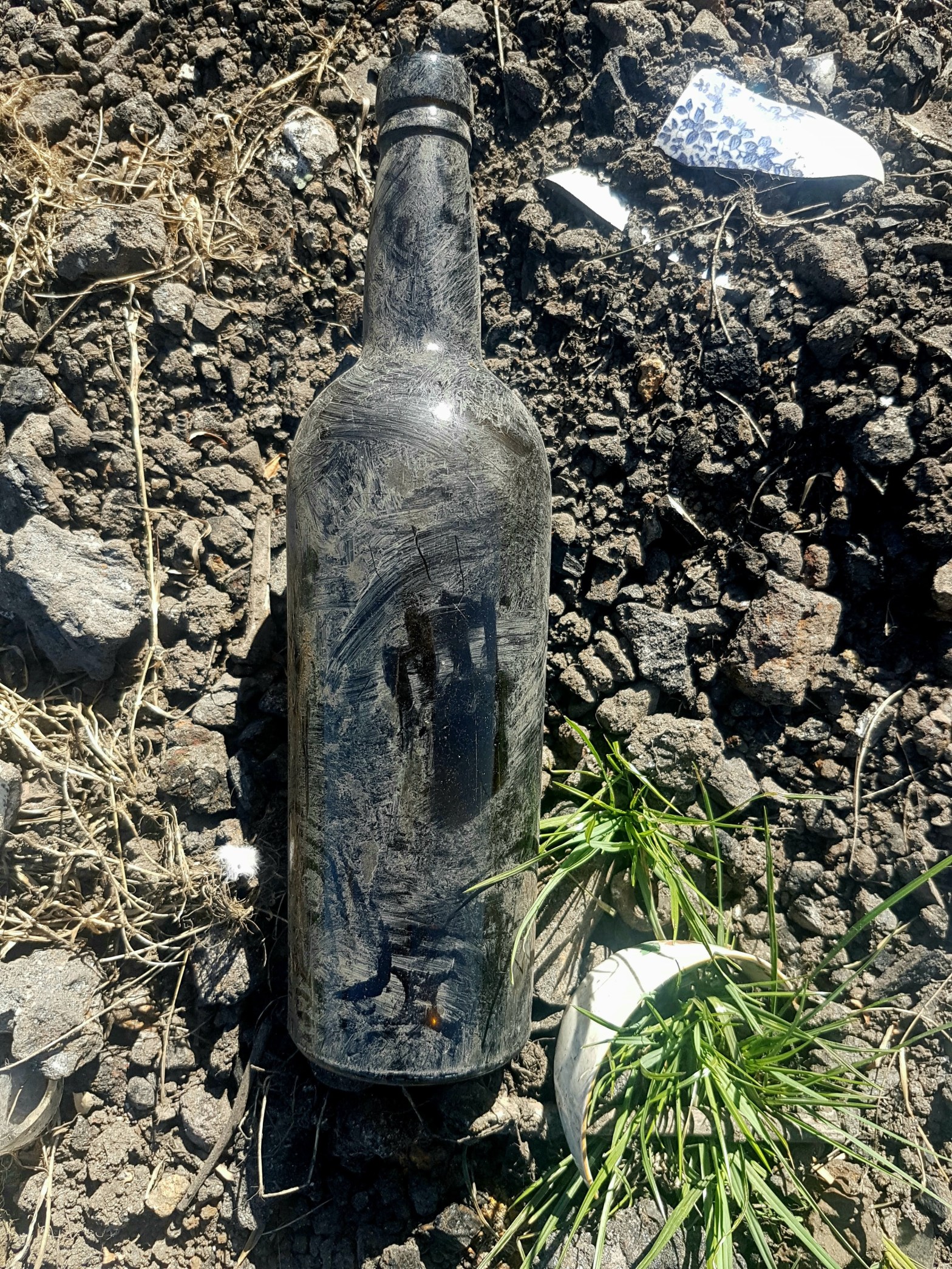
The location described at the very end of the story was my starting point for writing it – although I didn’t know then what story I was going to be writing. During lockdown we walked nearly every day along, around and across a nearby sports field. At the far side of this field is a badgers’ sett built within an old midden – a town rubbish heap from, we estimate the 19th or early 20th century. The badgers’ digging throws up all sorts of old items including animal bones, broken pieces of crockery and many, many glass bottles of curious shape and size. The place fascinates me with its mixing of life old and new, human and animal, and I wanted to include it in a story.
When I start to write a short story or flash fiction I often have no more than a word, a thing or a place in mind – something that has intrigued or interested me. I mull this ‘prompt’ over until I find an opening sentence and then I begin to write. The story unfolds as I write it and I almost feel sometimes as if I am its first reader more than its writer. ‘A construction of loss’ began in this way and found its own voice. I had in mind a fun story riffing off Wind in the Willows (incidentally, Kenneth Grahame is buried very near here) but what emerged was something quite different.
Beyond the field is a river and we have kayaked or canoed it several times. This then became the obvious way to bring the characters of my story together. As I wrote, a more serious and sombre tone settled onto the story and it became about loss and the things we live for.
Writing about a talking animal in a story that is not for children, nor even humorous, is challenging. It is for my readers to judge whether I have done it successfully. This published version was, however, hugely improved by the input and advice of some early readers who helped me see where I was straying into the twee and reminded me that less is more and how tiny words can make big differences.
 Hilary Coyne